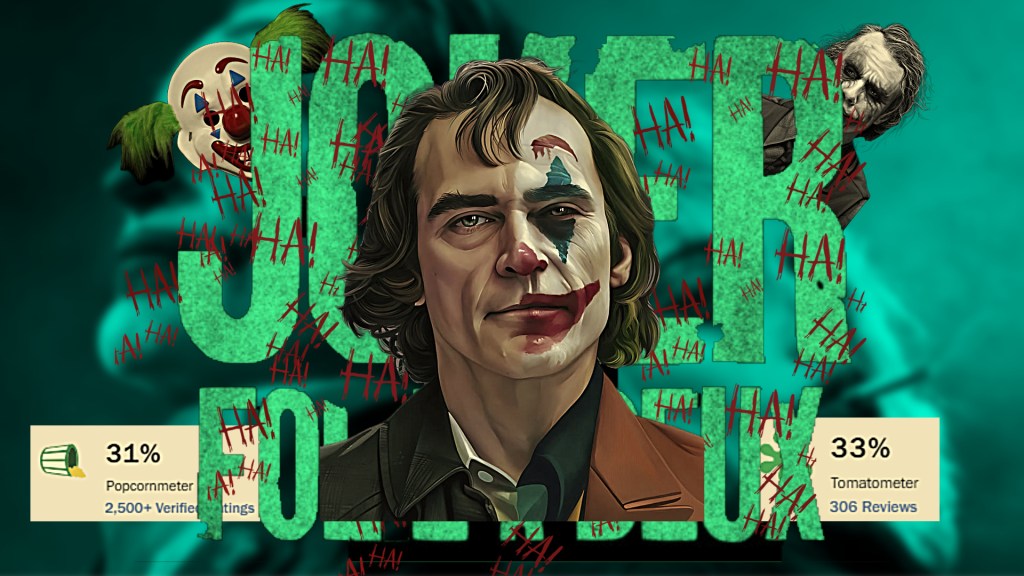
Okay, okay, okay—enough is enough. The slander against Joker: Folie à Deux has to stop. As a diehard DC fan, I understand the disappointment. We all wanted the perfect, bloody, violent Joker origin story. After watching Joaquin Phoenix’s portrayal in 2019, I thought, “Here it is—the setup for a deep dive into one of the greatest villains we’ve loved to hate for decades.”
The Sequel’s Direction
However, Todd Phillips’ sequel took a different direction—interesting, to say the least. We follow Arthur Fleck—just Fleck, nothing more (but more on that shortly). Before we dive deeper, let’s take a moment of silence for Joaquin’s masterful portrayal of the character.
…
Alright, let’s get to the crux. Critics and fans have dragged this movie for various reasons: the plot feels redundant compared to the first film, the drawn-out musical sequences, and the lingering question of whether this universe is building up to a Harley Quinn origin story. Side note: it would be cool if we actually get to see her team up with the real Mr. J down the line.
But Todd Phillips confirmed that this sequel will mark his departure from the DC cinematic universe. Given the surprisingly low box office performance Folie à Deux has pulled in, I doubt anything will come of this DC timeline.
The Ending
This brings us to the ending, arguably the biggest criticism of the movie. According to Insider and Time Magazine, it can be summed up like this: “Folie à Deux is about… well, nothing. It feels like a movie for no one.” After watching it for myself, I get it. The hardest part for me—as an optimist, despite the low pre-release reviews—was watching Fleck die in prison, left with the question: “What was it all for?”
Two hours of watching a mentally ill man destroy cigarettes, paint his face, fantasize about a woman, and then… nothing? Outside of the gate scene and a few short hallucinations, we never even see him crash out. It’s all in his head.
The Shift in Perspective
After the movie ended, I found myself questioning my life choices. But then I decided to think about it differently—through the lens of a born-and-raised New Yorker.
Let’s be real: we wanted Fleck to get the evil happily ever after he was destined for. But in terms of Gotham—this twisted, supercharged version of New York—this movie nailed it. Arthur Fleck’s life behind bars, going from martyr to nothing more than a joke, a memory lost within the broader movement that is the Joker, reflects the institutional cycle of suppression marginalized groups face. When the film reveals that Arthur Fleck isn’t even the real Joker but a tragic figure of mental illness consumed by his delusions, it drives home a chilling message. Fleck embodies not just one man’s descent into madness, but the countless invisible people—those failed by a broken system, discarded by society, and left to die in obscurity.
He was never destined to be Gotham’s greatest villain—just another victim of it. In a city that builds its legends on the backs of the forgotten, Fleck’s story feels disturbingly familiar.
Think about it. The Arthur Flecks of the world—the homeless, the mentally ill, the criminalized—never get to be heroes or villains. They’re pawns in the game, ghosts in a city that has already decided their fate. The fact that Fleck dies in prison, murdered by a nameless inmate, proves that his story was never about becoming the Joker but about how society produces countless ‘Flecks’ who will never rise above the system that crushes them.
Now, I doubt Todd Phillips meant for the film to be seen this way, but as a fan of Gotham—a city similar to mine in many ways—I was at least relieved to see those explicit, invasive, yet real aspects of an unjust world brought to life. It’s worth noting that Folie à Deux translates to “madness of two,” a fitting title that paints a picture of the shared insanity between Arthur Fleck and the societal structures that shape him. I believe “Folie à Deux” was a ‘joke’ deliberately, a climactic middle finger, I’d say. But this film also remind us that the chaos we witness isn’t solely Fleck’s—it reflects the collective madness we all have within us.
A Deeper Look at Fleck
Maybe Arthur Fleck was just an incel chasing sexual validation. Or maybe he was a man stripped of friendship, mercy, and love, denied at every turn. His right to life, liberty, and the pursuit of happiness was revoked by being born in Gotham. Was he a monster who killed five people for fun, or were those acts a desperate cry for help echoing through the streets?
We’ll never know for sure. But it’s always struck me how Batman seems to be fighting against Gotham just as much as he’s fighting to save it.
Conclusion
Maybe Joker: Folie à Deux was never about giving us a resolution but about offering that haunting perspective. Is it worth it? That’s up to you. Quite honestly, this perspective helped me sleep peacefully at night after watching this sequel… well, shit the bed.
And as you ponder that, why not hit that like and subscribe button? Especially if you made it this far!
Thanks for reading—I’m Enoch Naklen, and as always: Good morning, good evening, and goodnight.
This project, which was meant to serve as an objective deep dive into a rich section of Brooklyn history, feels very raw.
I’m not dissatisfied with the product. Rather, I’ve come to terms with the gritty, unadulterated aspects of telling this story — and perhaps, telling any story in history. I’ve come to personally realize (although I’ve been told this in many other iterations) that history can only be what the narrator wishes it to be. There was no denying that in this project. So, instead of leaning into the altruistic naivete that urges my 19-year-old journalist mind to tell a story without bias, I purposely structured this story as if it were my own.
Partly because it is. Crown Heights is my birthright — my birthplace and the backdrop of almost every notable experience in my life. I could not tell this story without that admission bleeding through the seams of this product.
But it was also partly because, through the creation of this project, I’ve come to realize the urgency of adding your story to ‘his’tory. Stories from the past are passed down through the hearts, minds, and souls of those who care to share them. Although details inevitably become puzzle pieces as fragments of the story fall off, the essence of each inflection point throughout history will always hold meaning across generations, if we let it.
I am more than thankful for the guidance of notable figures in my community. The upkeep of any coexisting space involves leaders who are willing to sacrifice their time and energy. I have nothing but respect and admiration for the students of the past, like author Ed Shapiro, as well as the changemakers of the future, like Rabbi Eli Cohen and Assembly Member Phara Souffrant Forrest.
I’m honored to document my family’s stories — my mom’s and my forefathers’. My grandfather, who I discovered was a talented photographer when I found his old pictures, is a significant part of this legacy.
I published this ‘deep dive’ for you guys (and myself, of course).
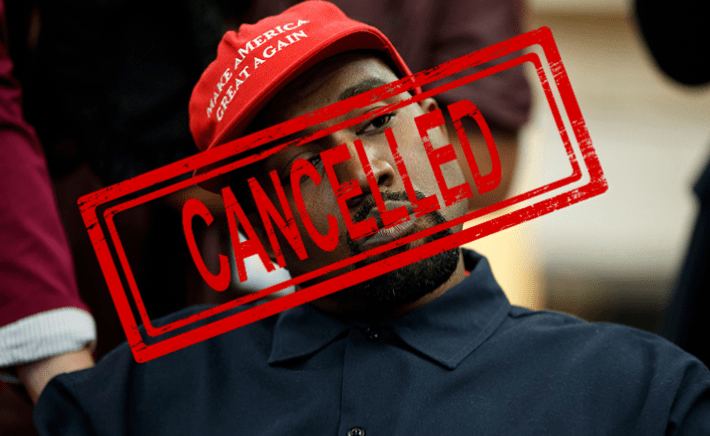
I’m so embarrassed to be a Kanye West fan right now.
Ye, the long-time rap icon, has recently faced a downward spiral of infamy due to negative comments and actions online. Accusations of spreading anti-Semitic messages in new singles and interviews, as well as being caught performing sexual acts in a public lake, have damaged his social standing. Some attribute his behavior to his ongoing struggle with mental health issues, while others characterize Kanye as an ignorant and scornful figure experiencing manic episodes.
I hope you don’t confuse that initial statement with ‘I’m not a Ye fan anymore‘. Kanye West, the artist behind some of the greatest 2000’s and 2010’s albums, is a completely separate entity from Ye, the toxic social media personality of this decade.
I wasn’t the youngest Kanye West fan in the world; in fact, my parents didn’t allow me to listen to much hip-hop until I was 13. My mom made it her mission to shield me from an entire era of music that included young Drake, J. Cole, Kendrick Lamar, and, of course, Kanye West. Instead, I was subjected to gospel music day in and day out. You might be wondering, “Why didn’t you just listen to music on your phone or tablet?” Well, every device I had as a pre-teen came with strict parental controls, which meant I could only access the children’s versions of media apps.
I was a pretty obedient kid. I definitely didn’t sneakily grab an unattended Samsung J7 from the kitchen counter, miraculously remember the password, and then binge on age-restricted videos for 30 minutes while the owner wasn’t around. And even if I had (which I absolutely didn’t), 30 minutes of screen time wouldn’t have been enough to keep up with everything in the music industry.
As a result, I didn’t discover Kanye West’s greatest hits until high school. Maybe I was late to the party, but I became an instant die-hard fan. Night after night, I’d listen to a playlist of “Graduation,” “The Life of Pablo,” “Watch the Throne,” and “Ye” in that order. It was a ritual I swore to maintain until the very fabric of space and time fell apart. Once all 34 songs—or precisely 4 hours, 15 minutes, and 33 seconds of music—had played, I might consider exploring other artists.
Ironically, what I found most appealing in Kanye West’s music was the clear inspiration drawn from the gospel music genre. Kanye was among the pioneers of the rap-gospel genre, often incorporating choir singers into his songs to evoke the same ethereal feeling found in traditional gospel music. For those intrigued by this sound, I recommend listening to the platinum hits “Ultralight Beam” and “Through the Wire” by Kanye West.
Kanye’s music had a unique way of elevating any emotion I experienced. I admired his willingness to experiment, which allowed him to create music that pushed the boundaries of generic rap songs from previous decades. I could always rely on Kanye to deliver consistent, well-thought-out, and positive music ever album.
I would never say this out loud because UNFORTUNATELY, Ye is a dumbass.
I wish there was a way to separate a productive artist from a problematic celebrity.
Forever and always took new meaning when my eyes first met yours.
From the moment your soul connected to mine through gaze I knew subconsciously I will need you for the rest of my life. I held back the animalist urge to imprint all my hopes and dreams into your eyes. My mind, invested in dopamine only your twinkly, beautiful eyes can manifest, longed to find the right words to assert my immediate devotion. I knew we belonged together 50 years down the line. You will be the one beside me as I tell our story of love at first sight to grandchildren who still yearn for a story of their own. We, together, will be a living testament to those who don’t believe in the divine intervention that brought us to each other that day. Before sharing a word, my new life in your eyes flashed before mine. Unknowingly, we’ve intertwined our destinies. We were meant to be. I know that. I’m sure of it.
Forever and always I will remember true love as the day my eyes first met yours.
What is the probability that a Sim card gets damaged without falling out? I’ve seriously never heard of such a thing. Either way, life’s cruel nature had no time for my ignorance.
To be honest, it was kind of my fault. I wanted to continue watching “Kitchen Nightmares” on my phone while scrubbing myself clean in the shower, knowing there was no secure place to place my phone in eye view. The chance I took seemed to be relatively harmless, as I figured the Iphone 13 pro, with all of it’s advertised indestructible material and waterproof features, would be able to withstand a little fall if it did happen to slip in the shower.
I ultimately decided to cram my phone in between two (what I assumed to be) sufficient sized body wash bottles.
In hindsight, this decision was needlessly idiotic. Because the bottles were relatively large and the steam generated by the shower fogged my already poor vision, I could barely see anything. Additionally, I could barely even enjoy Gordon Ramsey’s insults, as his voice struggled in vain to beat out the steady beating of the water.
I don’t blame the forces that punished me for my blatant ignorance. My only protest would concede to the human condition; loneliness. I knew I wouldn’t be able to fully immerse myself into the Kitchen Nightmare episode as I was before getting into the shower. I would argue that my subconscious was fully aware of this, and was willing to take the risk at the benefit of the company Ramsey provided. Somewhere inside, the separation anxiety of being isolated in that shower scares me more than simply losing my 700 dollar phone. The fear of being alone, eyes closed, on my own, fully autonomous, even if just for the 15 minutes an average shower takes, is why I risked my phone’s life.
By now, it’s reasonable to assume my phone did end up falling. But not only did it fall, the fucking SIM CARD got wet. Somehow, without it even falling out the sim card got wet, and then corroded by the heat of the steam.
How weird it feels to be the ‘unstable’ one for once.
Breaking the boundaries of our composed masculine nature, we scream. We scream with the rage we’ve grown to be comforted by.
But, involuntarily, we also cry. We cry even though logic tells me not to. In spite of every other piece of our bodies rejecting this illegally vulnerable action. We cry.
Doesn’t it feel good? Maybe a little better than I expected.
We’ve quickly learned that it’s best to lean into your tears. Once the flood gates open, it’s best not to fight it.
In that moment, we embrace our pain, loss, anger, personified.
Claim them. They’re yours and yours alone.
The clash of sounds are reminiscent of the somber sorrow every teenage boy shares.
These shouts and tears you’ve become accustomed to denying the existence of.
My head and heart beat in somber harmony. They try their best to match Labrinth’s melancholy; “Jealous”y infiltrates my soul.
“I’m jealous of the rain” Drops as they lands on my face. At that moment, their cycle ends. It ends so fast, in fact, I could only envy them. The lives of RainDrops serve only as a reminder of my relative immortality. I am not predisposed to die so instantaneously. And who’s to say my body will serve a purpose as great as the Drops will when they assist the statues of nature in decorating the sky.
I can only pray that god will repay me for his mockery in my design. For making my life so much longer and complicated than any of the Drops that surround me.
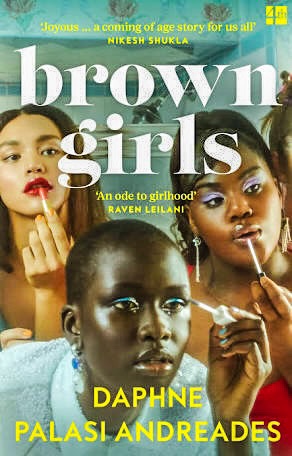
Daphne Palasi Andreades’s debut novel, “Brown Girls” is unlike anything I’ve personally read before. Through the omniscient perspective of ‘Brown Girls’ in the East Coast, Andreades narrates the collective experiences of minority women as they transition from childhood to adolescence, and then adulthood. Thanks to the unconventional structure of the novel, “Brown Girls” is able to touch on various aspects of a Brown Girl’s life that makes it both enjoyable and exponentially harder than one would imagine.
Now I will say, there are many concepts Andreades explores really well in “Brown Girls” that I won’t be able to get to within my 10 quotes. Ideas on death, gentrification and the dynamic of interracial relationships are just a few topics that make this novel something to invest your time into.
That being said, let’s start with
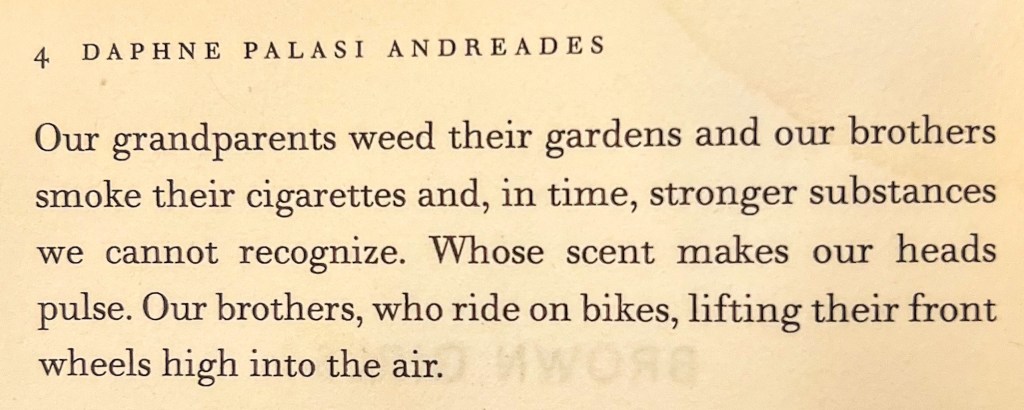
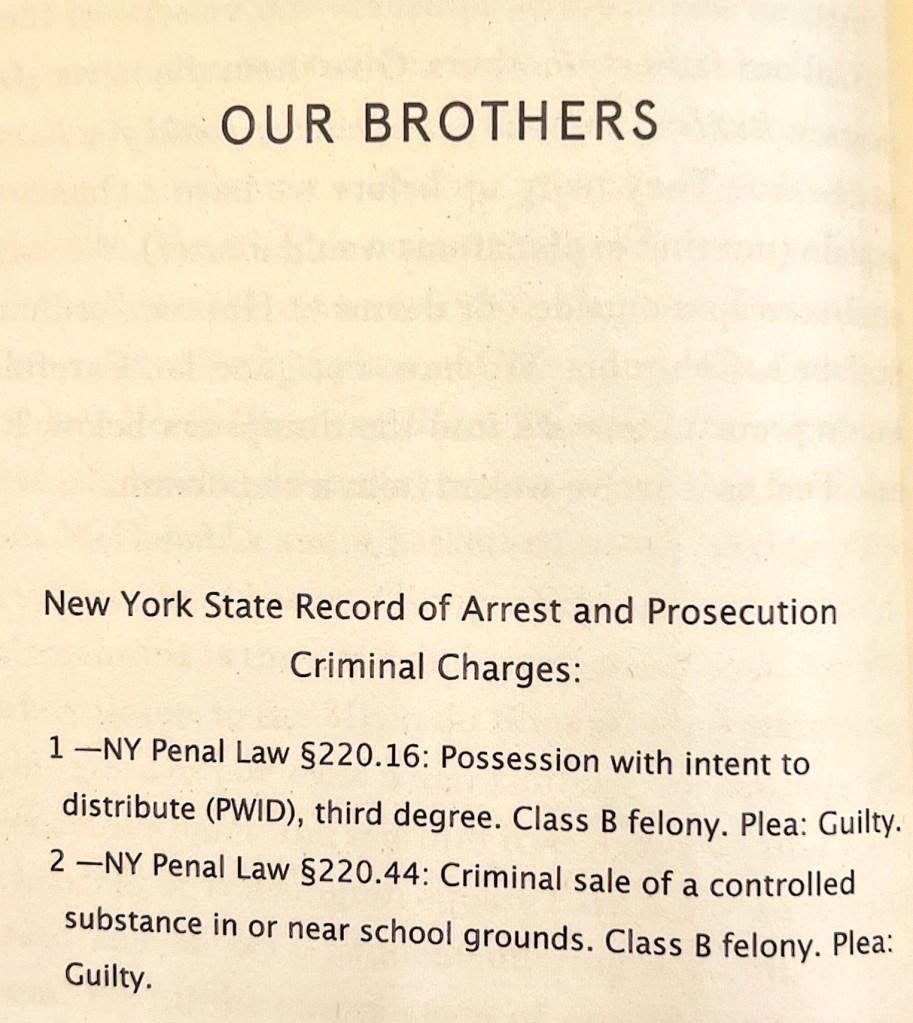
10. “Our brothers smoke their cigarettes, and in time, stronger substances we cannot recognize” (Your Own Kind, pg.4)
Although this novel is mainly about Brown Girls, Andreades is also able to squeeze in trends of Brown boys through the perspective of their female counterparts. In doing so, the reader is given a fragmented, yet informative view on what it means to be a man of color in America.
I initially loved this quote for the poetic wording Andreades uses here. It almost feels prophetic, as the “stronger substances” outlined here, refers to the same “” the Brown Boys would go to jail for later in the book.
Andreades uses the smoking of cigarettes at a younger age to highlight the common gateway drugs popular in minority households, especially for men in the community. Nicotine, alongside alcohol, shows up a lot in Brown Girls, which makes this quote increasingly ironic as we see it does indeed go from just smoking cigarettes and drinking here and there as kids, to a consistent getaway from the struggles of life for both brown boys and girls.
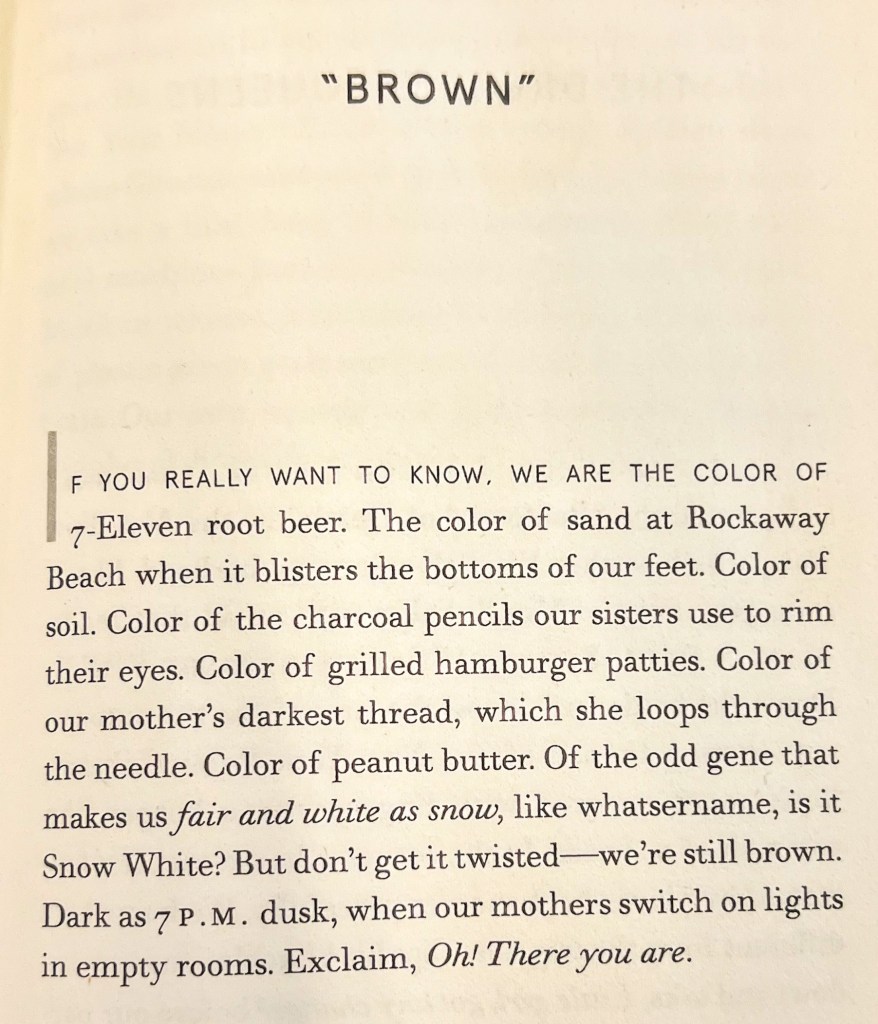
9.“If you really want to know, we are the color of 7-eleven root beer.” (Brown, pg.5)
If you didn’t catch the memo by the title, Andreades made sure we as reader understand; These girls referenced throughout the book are BROWN. But Brown, as Andreades also highlights in this chapter (ironically named Brown), comes in different tints, tones, and shades. Maybe some Brown Girls are the color of 7-eleven root beer, but other Brown girls are the color of Sand at Rockaway Beach, and even more others that have the “odd gene” that makes them as fair and white as snow. All Brown.
This is the core understanding that Andreades complicates through many challenges we’ll break down later. However, I can say that the zoomed in imagery displayed by Andreades in this chapter really humanizes the characters by comparing their skin to staples in minority communities all throughout NYC.
**Sidenote: Andreades first 3-5 chapters establishing the main setting of the novel was amazing. She had me hooked from early. **
It was hard trying to digest the generalizations that Andreades would make about Black Boys in this book. I found myself reading the first part of “Our Brothers” over and over, not because I couldn’t understand the overall point of the school to prison pipeline for minority men (which I will talk about in a minute). No, I read this section over to give myself the space as to not dissociate from the book, as that was my immediate reaction. I mean, this idea that Brown boys are rarely brought up, much less an active member in the lives of a Brown Girls life, and when they are brought up, it feels like an update on the downward spiral they’ve been on since birth. This is not the reality I come from as a Black young adult, and the lack of diversity expressed about the futures of Black boys made me often feel disconnected from the book. The representation of what a Brown Boy is isn’t relevant for this book, but I know from firsthand experience that that the “school to prison pipeline” isn’t the only path for Black young men so it rubbed me the wrong way that that was the main story arch for the “Brothers” in “Brown Girls.”
However, removing my personal feeling from the equation, I thought the passive storyline of the Black “statistic” through the “school to prison pipeline” as mentioned earlier was underlined well by Andreades. We see the beginnings of the pipeline in “Great Expectations” where Andreades contrasts the continuous track record of Dean’s office visits and poor teacher relationships of Brown Boys with the full merit scholarships Brown Girls would receive for their excellent grades throughout High School. Andreades feeds into this tragedy, as she foreshadows that although Brown Boys at that younger age believes they could still have a successful career; that they could still “make it out, the Brown girls can see how the system has doomed their brothers.
7. “We know we don’t belong here” (Welcome to Mars, pg. 77)
It becomes increasingly clear throughout this novel that Andreades is very intentional with her words and thoughts. In the Chapter, “Welcome to Mars” Andreades doesn’t give the Brown Girls the benefit of uncertainty and ignorance going into college. These Brown Girls KNOW they don’t belong in these prestigious college/universities across the country because they have already been thrusted into places like Stuyvesant and Brooklyn Tech by age 14; white dominated places that don’t represent or embrace them as an asset to the community. Everywhere that wasn’t the “dregs of Queens” not only felt foreign, but also in a way felt ‘too good’ for Brown Girls. That feeling of KNOWING they don’t belong may have started in high school as they ventured into the nicer parts of NYC, but it only became more amplified with the transition into college.
To be successful, it felt imperative for Brown Girls to blend into their white counterparts, which was hard considering these counterparts had the luxury of ignorance deriving from having pleasures such as being a legacy student and… Well just being white in America. Those were luxuries that were made painfully clear that Brown Girls would never get to have.
Andreades highlights the effect of the contrasts between the Brown Girls and the white dominated spaces they’re in very well by portraying signs of Imposter Syndrome. Many times, Brown girls are described as feeling inadequate no matter how many accomplishments they rack up. Andreades makes it a point to constantly compare the backgrounds of Brown Girls to the newer environments, in which the native background never quite seems to stack up.
Many times, Brown girls express their desires to go back home and concede to the challenges Imposter Syndrome presents for them. Statements from family like “Don’t go too far” and “You think you’re too good for us” always crept back up in the minds of Brown Girls.
This one hit home for me personally, as I also had my battles with Imposter Syndrome going to a specialized High School. At that age, I didn’t even know what Imposter Syndrome was. By now, I’ve learned to deal with the feeling, and embrace who I am regardless of the space I’m in.
Andreades introducing the topic in such a relatable way throughout the novel really warmed my heart and makes BROWN GIRLS an amazing read for those battling with the same mental uncertainty.
6. “Boys don’t cry. Boys weep.” (Our Brothers, pg.92)
One thing I love about Brown Girls is the way Andreades allows her strong sentences to metaphorically float, going from one packed sentiment to the beginning of an entirely different moment.
In the chapter, “Our Brothers” we see the black young men these Brown Girls grew up with complete the pipeline, heading off to prison. However, Andreades made a point to say that, although they’re going through such a traumatic experience, these boys “don’t cry.” Even if everything inside them wants to. That sensitive, emotional part of the boys that allowed them to feel comfortable doing things such as crying disappeared a long time ago. Now, the only emotions that feel comfortable are the ones that are raw, and uncultivated. “Boys weep” when the thousands of emotions bottled up within them finally spill over. They are human, it’s just very hard, and thus rare, we see those parts of Brown boys as they turn into men. That process of emotional hardening was one we don’t get to see as we’re immersed in the lives of Brown Girls throughout this novel. So that one sentence on the emotions of these Brown Boys is easy to miss.
The tragedy of toxic masculinity is one that plagues many households, specifically minority households. The pain we as Black men carry almost feels inappropriate to express. The vulnerability we lock away. And thus, Andreades was right to let this float. To move on to the next sentence without further explanation of what this quote means. From the outside looking in, it doesn’t look like anything too deep to digest because there isn’t much past the surface that’s shown.
5. “We are the grateful brown people”- (Everything We Ever Wanted, pg.57)
“We are the grateful Brown people.” I mean, just reading it back, it’s hard to fathom that there is a section of ignorant people who find nothing wrong with that sentence, much less to say to a POC. Microaggressions is something Andreades makes sure to highlight consistently throughout the novel. Sadly, microaggressions such as this seem to age with the Brown Girls as they grow up. “We are the grateful Brown People” came from the white family of their first white boyfriend, and was taken in stride by the brown girl because well, what do you say to that? There is no definite response to microaggressions, as Andreades points out that for a lot of Brown Girls, the natural response is to not say anything at all as to maintain the validation from being accepted by the white person they’ve been raised to think highly of (in some ways higher than themselves).
One of my favorite parts of the book came later in the book where the Brown Girls would reunite (in the chapter called Reunion) after going off to separate colleges and share their stories with microaggressions. By then, the Brown Girls had grown a greater confidence in their own skin, so in response to questions like “is Queens dangerous” the brown girl said, “Well I could cut you right now.” Another reaction went like this “I can’t read it aloud; my mom watches my videos” (can put in subtitles).
Microaggressions is something most minorities face at some point when encountering ignorant people, and because for the most part the insult is masked by the ignorance, Brown people, or in this instance, Brown girls struggle to navigate those interactions for a really long time. Andreades emphasizes this topic really well, mixing up the tone from lighthearted to really offensive throughout the novel.
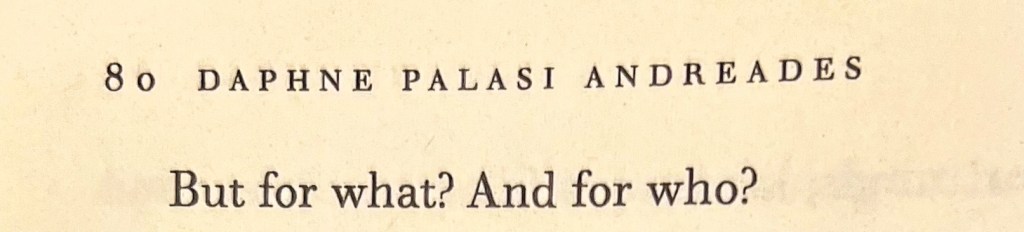
4. “’American Dream.’ But for what? And for who?” (Welcome to Mars! pg.79-80)
The Brown Girls of this book don’t get the privilege of having parents that’re “hip” to the modern world. For a lot of Brown Girls, their parents are first-generational. Others have parents that just weren’t able to live a life outside of what they knew was safe. The contradictory idea of not going too far from the Dregs of Queens while exceeding expectations in practically all aspects of life was out of love. Their version of the “American Dream” was simply creating a world safer and pleasurable than that of their pasts.
I don’t think Andreades places blame on the parents for the damage they’d done on their Brown Girls while trying to make their Dream come reality. However, it does often seem daunting for these same Brown girls to decipher the sense from nonsense their parents provide. Many times, those sentiments of the “American Dream” came off as limiting and confining to the Brown Girls. The worst part about it is the respect these girls have for their parents makes the guidance overconsuming. There seems to be an instilled part of the Brown Girls that wants to please their parents no matter the cost, which often comes as a detriment to them.
Fortunately, in every Brown Girl’s life, she begins to understand their parents as we will discuss later.
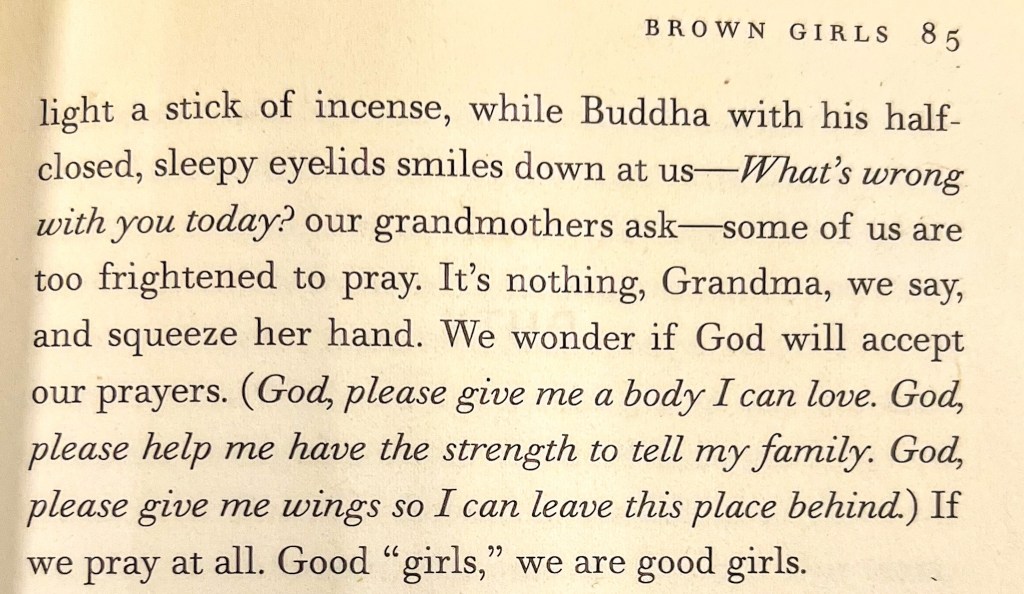
3. “We’re Too Frightened to Pray… We are ‘good girls’. We are good girls.” (Jenny, pg.85)
The Chapter this quote comes from, Jenny, is actually one part of 2 chapters that share the same name. Andreades separates these two by almost 80 pages which makes sense given that these chapters outline the continuous struggle with gender and sexual identity Brown Girls go through. “Jenny” stands for the crushes Brown girls would develop for other girls. However, for a lot of Brown girls, the crush only goes as far as being a crush. On the *relative* surface, this is because of the dangers of being a part of the LGBTQ+ community in the United States. In a country where hate crimes on LGBTQ+ members seem common, there is a sense of worry being public about their sexuality and gender.
However, what made these chapters strong for me was the intersection between religion and sociocultural backgrounds that served as an even stronger internal barrier for the Brown Girls that wanted to explore their identity. As Andreades points out in this quote, Black Girls fear the rejection by family, and by extension GOD for their deviation from the norm.
I say “by extension” on purpose, as Andreades makes a point to emphasize that the line between familial values and God are blurred for Brown Girls. This idea is best expressed in the chapter “Mom’s Commandments,” which plays on the 7 commandments set in stone by God in the Book of Exodus. The 5th commandment is the most telling. I mean it literally says that Brown Girls must “Obey, for I am the Lord.”
The expectation of being a “good girl” as defined by family makes it really hard for Brown Girls to ever feel comfortable in their own skin, and most girls, as Andreades expresses, never get that comfortability, even later in life.
Before I dissect this quote, let’s take a second to truly honor the strong women of color. Across history, women of color have been both our sung unsung heroes, with impact spanning all aspects of life. In the household, I grew up in, my mom was the strong woman of color I had as an example of who I aspire to be in life.
Andreades gives credit to the matriarchs of the lives of Brown Girls in a bittersweet way, emphasizing both the strength and resilience of women of color, and the tireless, seemingly never-ending task of being the perfect mother while juggling the struggles of life.
As adolescents, it’s hard for Brown girls to genuinely appreciate their mothers for their efforts. Many times, it was hard to connect to their mothers on an emotional level, with a blockage formed because of the mothers trying to mold the girls into their version of success.
It takes time, and adulthood, for the now Brown women to empathize with their mothers. (Find quote when you get home) The irony of it all is the generational curse of emotional blockages between mother and daughter present themselves with the Brown girls and their mothers. It wasn’t until the Brown girls subconsciously made the same mistakes their mothers made for them realized that it’s a lot harder said than done raising a child.
1. “Hoy, pare!” (Territory ,p. 62)
I thought the way Andreades structured this string of sentences was very cool. I mean, visually, the way each phrase looks seems to directly contrast with each other. And on the surface up till this point of the book, that would make sense. Andreades never specifies which ethnicities she’s referring to in her novel, and for a large part of it, it felt as though she would switch from one ethnicity to the next.
However, in these sentences, each phrase comes from a different culture but ironically means about the same thing. And no, I don’t just know that because I’m multilingual.
The chapter in which this quote lives is called Territory. In this chapter, Andreades details the memories of young brown girls introducing their white partners to their home area. We know by context from the page before that these are all the common things brown girls hear when they enter the local park they grew up in as kids.
Now, it was only here, two whole sections into the book, that I began to understand what “Brown Girls” truly meant. “Brown Girls,” as Andreades uses it, does not refer to one nationality but instead every GOC (Girl of color), as the experiences detailed in the novel are something that to some extent is relatable to each and every one of you.
Where “Brown Girls” thrives as a novel is its ability to weave together the collective hardships and accomplishments of minorities in a way that makes it relatable to any POC of any background. Although Andreades appoints a specific protagonist for the entire book, many times the protagonist of the story feels like every brown girl on the East Coast.
In that way, Brown girls is an amazing reflection on the harrowing tale of the life of East coast brown girls, but even more than that, instills a weirdly comforting message that, even when it feels like it, you are never alone. There are other brown girls like you that feel how you feel; brown girls that share almost identical experiences to you despite being a different race or ethnicity.
Rating
Personal Enjoyment: 8.5
Plot/Structure: 7.8
Relevance:9
Overall score: 8.4
“Brown Girls” is a strong debut for Daphne Palasi Andreades, and as a current Baruch student, I’m inspired seeing the work that comes from this school. Her versatility as a writer was put on display in this novel, and I can’t wait to see how Andreades is able to top “Brown Girls” her next piece (as I’m sure she will). I encourage every Brown Girl on the East Coast and beyond to give this book a read. It really does a great job of giving minority girls a novel that speaks about their issues that are otherwise kept under the radar.
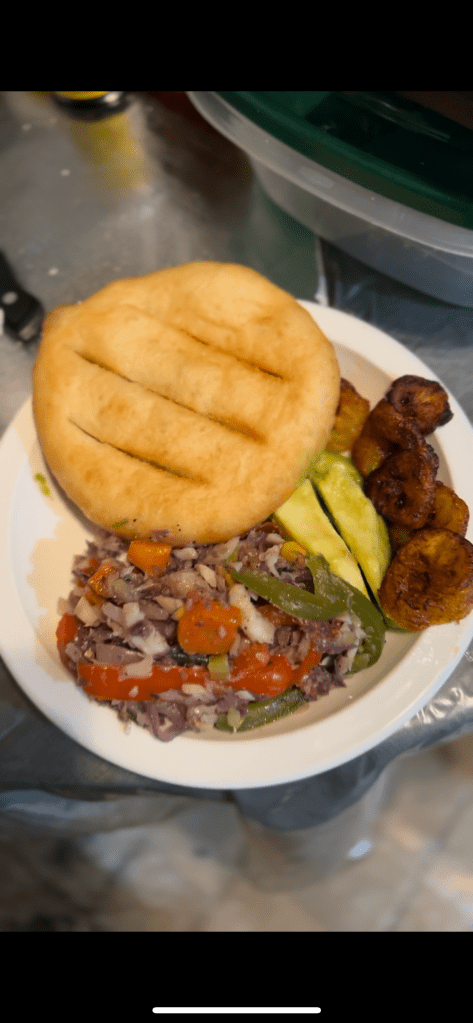
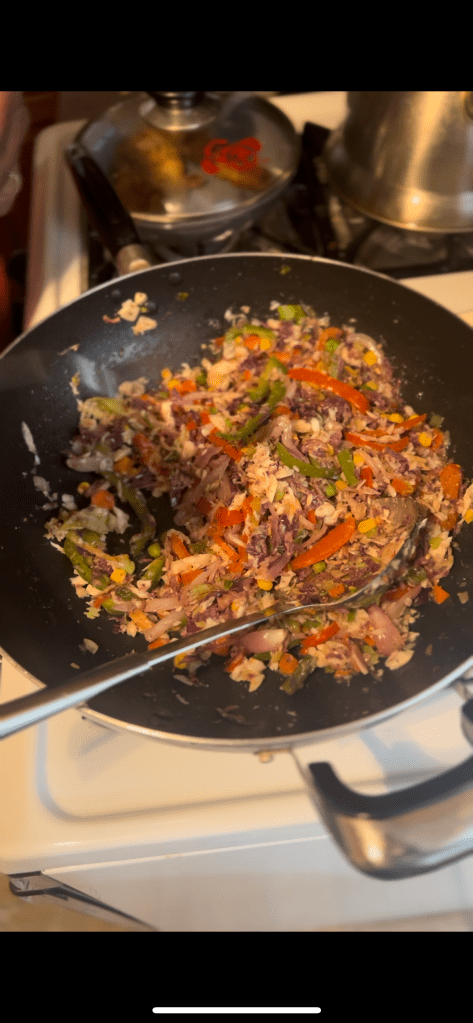
This is not a Dish I’ve made before. I don’t think I have that superpower. The best way I could describe the Dish is “Vegetable Salt-fish and Bake” but I don’t think that name really serves justice. “Vibrant Salt-fish and Bake” fits a bit better. I mean look at it . The flashiness of the bell peppers, and assorted cabbage is elegantly contrasted by the humble colors of salt-fish and onion (ironically two of the more prominent flavors in this dish). I love eating with my own eyes, so even the appearance of Vibrant Salt-fish and Bake was pleasing.
Of course, this Dish does not appear out of nowhere. No, it was, much like a child, raw and uncultivated. My mom was the one to breathe life, and more importantly personality into this Dish. I sat down and admired as she disassembled each individual ingredient from its natural state, into a beautiful melody of assorted ingredients that worked (at least visually) way better together. In that way, I reflect on the ways my mom was able to instill the core values and morals that make me who I am today.
Weirdly as I’m writing this, I’m reminded of my little brother, and how I observed the same process play out between him and my mom. Now, he is successful in his own rite, climbing his way to fame in his basketball career. What powerful hands my mom has.
After prepping for the Dish, my mother made sure to preheat and oil her pan with fresh thyme and all spices for flavors only she seems to understand (I never personally taste those things). After preheating, she systematically placed the ingredients inside the pan, allowing each new addition to the pot to simmer and caramelize before adding something else.
The patience it took for me, much less my mom who was cooking the meal, to not stop and eat the halfway cooked Dish was impressive. By now, the Dish had transitioned from the comforts of a child to an adolescent, flexing its boisterous aromas. How ignorant of the Dish; it does not know the maturity it will gain once it is out the pressures of the fire surrounding the pan it is in.
I imagine this is what my mom felt watching me go through my “All- American wannabe” phase in high school. She never put a dim on my light, as I was eager to boast about my newest accomplishments. But I know she knew my journey was only the beginning.
The Dish, after all the ingredients were proportionally added into the pan, simmer together. It is then, and only then, that she adds the seasoning to the Dish. Black Pepper, a bit of garlic powder, bouillon cube and a bunch of other spices I could not tell were put into the dish to finally give it that upgraded personality it did not know it needed. The Dish would then sit there on low heat, allowing itself to bask in the oils and spices as one beautiful meal.
I would imagine this blossoming stage towards the end of its cooking is what I will be for my mom. The same way she tastes the Dish to see if she has gotten it right before serving to anyone else, I dream of passing every test my mother might put me under to ensure I am the best version of myself before I am thrusted into the world. I feel safe knowing my hardest critic is also the one who has poured blood, sweat and tears into making me the best version of myself. I bet at this point, both the Dish and I are happy we had such a good mom.
At its conclusion, The Vibrant Saltfish is married off to the Bake (which I did not see the process for), and they live happily ever after. I could tell by my mother’s expression while eating it that she was content with her work. By the end of the cooking process,
The Dish and I had become brothers by the same mother, perfected in our own unique ways, and ready to showcase its millions of capacities and talents to the world.